
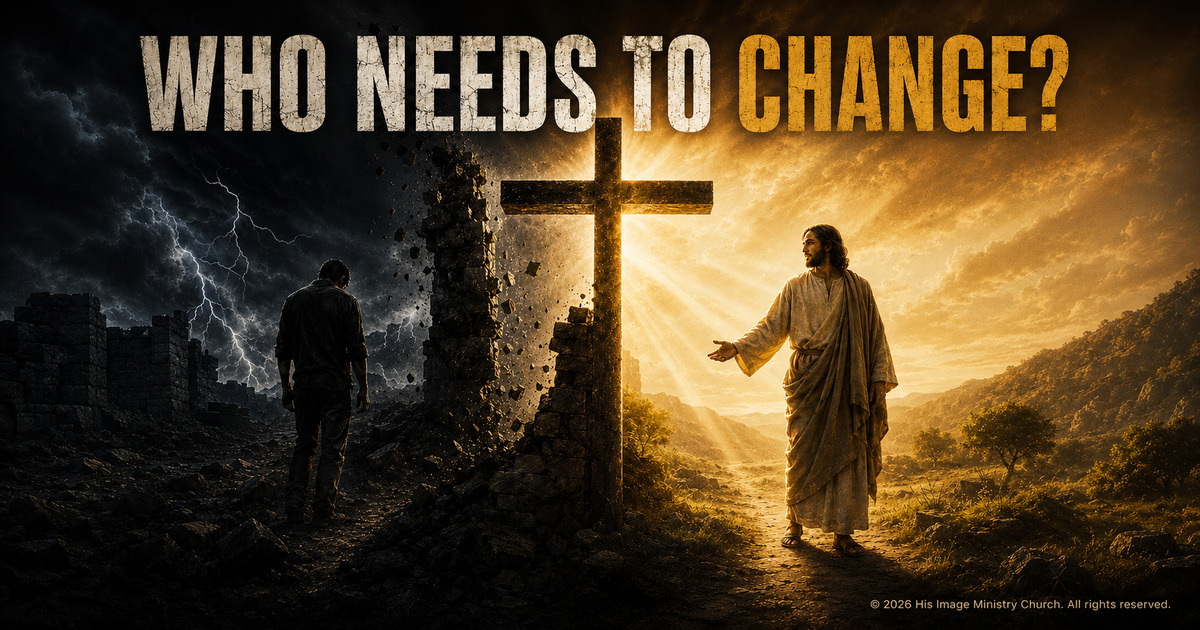
Discovering the Difference Between Conciliation and Reconciliation
By George Maitland of His Image Ministry Church
What if two words that appear to describe the same thing are actually revealing two distinguishable movements within one divine operation? What if conciliation and reconciliation belong together, proceed through the same Christ, and rest upon the same cross, yet cannot be collapsed into one another without obscuring the order established in Scripture? And what happens to the evangel when that order is reversed?
The question is not merely whether one English word should be preferred over another. The question is where peace originates, how it proceeds, what it accomplishes now, and where God has declared that it will finally arrive. If peace begins with the creature, then humanity becomes the source of the decisive movement. If peace begins in God, proceeds through Christ, and is announced to the creature, then the response of the creature is real, but it can never become the origin of what God has already established.
The Governing Distinction
Conciliation is God’s unilateral action through Christ toward those who remain estranged and hostile. God establishes peace from His side of the relationship, not reckoning their offenses to them, and places the word of that conciliation in His ambassadors. Conciliation is therefore true before the estranged creature recognizes or participates in it. It does not mean that mutual peace has already been realized by every creature.
Reconciliation is the mutual peace God produces through Christ when the enmity of the estranged is overcome and they are brought into agreement, access, and conscious participation with the peace that originated in God. Reconciliation is presently realized among those whom God has brought into peace through Christ and will ultimately encompass all on the earth and in the heavens.
The relationship between them: Conciliation is not incomplete reconciliation, and reconciliation is not humanity completing God’s unfinished work. Conciliation is the originating peaceful action of God through Christ. Reconciliation is the mutually realized relationship God brings forth through Christ on the foundation of that conciliation.
This is why the distinction must be received from the passages themselves. We cannot begin with an inherited definition and then force every occurrence to conform to it. Neither can we assume that because conciliation and reconciliation are related, they are interchangeable. We must first observe how Paul uses each term, where he places it, who is acting, who is being acted upon, and what result the passage itself declares.
The first substantial Pauline presentation appears in Romans 5. Paul has already established that those who are justified by faith may be having peace toward God through our Lord Jesus Christ. He then directs our attention away from human worthiness and toward the timing and action of God:
“Yet God is commending this love of His to us, seeing that, while we are still sinners, Christ died for our sakes. Much rather, then, being now justified in His blood, we shall be saved from indignation, through Him. For if, being enemies, we were conciliated to God through the death of His Son, much rather, being conciliated, we shall be saved in His life. Yet not only so, but we are glorying also in God, through our Lord, Jesus Christ, through Whom we now obtained the conciliation.”
Romans 5:8–11, CLV
When did Christ die for our sakes? Paul says it was while we were still sinners. In what condition were we when we were conciliated to God? Paul says we were enemies. Through what were we conciliated? Through the death of His Son. Through whom did we obtain the conciliation? Through our Lord Jesus Christ. Every answer directs our attention away from the creature as source and toward God acting through His Son.
The order is already visible. Humanity did not first cease being hostile and then qualify for conciliation. We were conciliated while enemies. The death of the Son did not follow our movement toward God. The conciliation followed from His death. Whatever else conciliation may include, Romans will not permit us to make human friendliness, human comprehension, or human decision its originating cause.
Even the grammar preserves this order. Paul does not say that we conciliated God to ourselves. He says that we “were conciliated to God.” The action is received. The enemies are not presented as the originating agents. They are those upon whom the result of the Son’s death operates. The passage then moves from His death to His life, from being conciliated to being saved in His life, and from human enmity to glorying in God through Christ.
What, then, has happened to the hostility? Romans does not say that those enemies had already corrected their own comprehension and thereby produced peace. It says that God commends His love, that Christ dies while they are still sinners, and that through the death of His Son they are conciliated. Conciliation therefore proceeds from God’s love through Christ’s death toward those who had not supplied its cause.
Yet Romans 5 is not the only witness. In 2 Corinthians 5, Paul returns to the same word family and expands the scope, the message, and the administration of conciliation. The immediate context is new creation. The primitive has passed by, and there has come new. Paul then declares:
“Yet all is of God, Who conciliates us to Himself through Christ, and is giving us the dispensation of the conciliation, how that God was in Christ, conciliating the world to Himself, not reckoning their offenses to them, and placing in us the word of the conciliation.”
2 Corinthians 5:18–19, CLV
Before we attempt to explain conciliation, what judgment governs the passage? “Yet all is of God.” Paul does not permit the reader to relocate the source. God conciliates. God acts through Christ. God gives the dispensation. God was in Christ conciliating the world to Himself. God is not reckoning their offenses to them. God places the word of conciliation in those entrusted with its administration.
Who, then, is the Source? God is. Through whom does the action proceed? Through Christ. Toward whom does it extend? Toward the world. What accompanies it? The non-reckoning of their offenses. What is entrusted to the ambassadors? Not a word explaining how humanity may cause conciliation, but the word of the conciliation God has accomplished in Christ. The progression is not constructed by theological preference. It is the grammatical and contextual movement of the passage itself.
This is where the distinction begins to acquire definition from Scripture. Conciliation is not first presented as mutual recognition between two parties. It is presented as God’s action through Christ toward a world whose offenses He is not reckoning to them. The world is the object of the action, not its source. The conciliation is true before the world as a whole recognizes it, because God’s action does not receive its truth from the world’s comprehension.
But if God is conciliating the world to Himself, why is an appeal still necessary? Paul immediately answers:
“For Christ, then, are we ambassadors, as of God entreating through us. We are beseeching for Christ’s sake, ‘Be conciliated to God!’”
2 Corinthians 5:20, CLV
Who is entreating through the ambassadors? God is. To whom is the appeal directed? To those being addressed through the word of conciliation. What are they told to do? They are not told to conciliate God to themselves. They are told, in the passive form, “Be conciliated to God!” The grammatical direction preserves the theological direction. God is not presented as the resistant party whom humanity must move. The entreaty proceeds from God toward the resistant comprehension of the creature.
Why would God entreat if His own disposition were the unresolved problem? Why would the ambassadors announce non-reckoning if God remained the party who needed to be persuaded? Why would the appeal be directed toward the creature if the obstacle continued on God’s side?
The tension resolves only when the order is preserved. God’s conciliation precedes the appeal. The appeal proceeds out of the word of conciliation. The creature is called into agreement with an action that originated in God through Christ. The response does not make God conciliatory. The response brings the one hearing into conscious agreement with the conciliation already being announced.
This does not make the response unreal or unnecessary. It locates it properly. Hearing does not originate the word heard. Believing does not originate the truth believed. Recognition does not originate the reality recognized. The creature truly hears, believes, and comes into peace toward God, but the creature does not thereby become the source of God’s action in Christ.
At this point, however, another question must be faced. If conciliation brings peace from God toward enemies, is reconciliation simply a different name for the same action? Paul’s language does not allow us to answer too quickly. In Romans 5 and 2 Corinthians 5, the Concordant rendering consistently speaks of conciliation. In Ephesians 2 and Colossians 1, Paul speaks of reconciliation. The underlying forms are related, but the latter passages contain an added element in the Greek form. That structural observation alone does not authorize us to invent a doctrine, but it does require us to examine whether the contexts also present an expanded or completed relation.
Ephesians 2 provides a competent witness. Paul is addressing the nations in flesh, those who were once apart from Christ, alienated from the citizenship of Israel, guests of the promise covenants, having no expectation, and without God in the world. Yet now, in Christ Jesus, those who were once far off have become near by the blood of Christ. Paul continues:
“For He is our Peace, Who makes both one, and razes the central wall of the barrier (the enmity in His flesh), nullifying the law of precepts in decrees, that He should be creating the two, in Himself, into one new humanity, making peace; and should be reconciling both in one body to God through the cross, killing the enmity in it. And, coming, He brings the evangel of peace to you, those afar, and peace to those near, for through Him we both have had the access, in one spirit, to the Father.”
Ephesians 2:14–18, CLV
What changes in this passage? The movement is not described merely as God refusing to reckon offenses. Those once divided are made one. The central wall of the barrier is razed. The enmity is nullified and killed. The two are created in Christ into one new humanity. Both are reconciled in one body to God through the cross. Through Christ, both have access in one spirit to the Father.
Here reconciliation is connected with the removal of enmity and the establishment of an actual shared relation. Those afar and those near are not merely informed that peace exists somewhere outside their participation. Christ Himself is their Peace. Both are made one in Him. Both are reconciled in one body to God. Both have access to the Father.
Does this reconciliation originate in either group? Again, the text will not permit it. Christ makes both one. Christ razes the barrier. Christ creates the two in Himself into one new humanity. The reconciliation is through the cross. The access is through Him. Reconciliation therefore cannot be defined as an autonomous human action that completes a partial divine attempt. It is a work accomplished through Christ that kills enmity and brings those once divided into peace and access.
Colossians 1 provides the further witness and expands the declared scope. The immediate context begins with Christ, the Image of the invisible God, the Firstborn of every creature. All is created in Him, through Him, and for Him. He is before all, and all has its cohesion in Him. He is the Head of the body, the ecclesia, and in Him the entire complement delights to dwell. Paul then declares:
“And through Him to reconcile all to Him (making peace through the blood of His cross), through Him, whether those on the earth or those in the heavens. And you, being once estranged and enemies in comprehension, by wicked acts, yet now He reconciles by His body of flesh, through His death, to present you holy and flawless and unimpeachable in His sight.”
Colossians 1:20–22, CLV
The context will not allow “all” to be reduced casually to an undefined fragment. The preceding verses repeatedly locate all in relation to Christ. All is created in Him. All is created through Him and for Him. He is before all. All has its cohesion in Him. The passage then declares reconciliation through Him, whether those on the earth or those in the heavens.
Yet Paul does not leave reconciliation only at the level of its eventual scope. He turns directly to the Colossians. They were once estranged and enemies in comprehension by wicked acts, yet now He reconciles them through Christ’s body of flesh, through His death. Where was the enmity identified? In their comprehension, expressed by wicked acts. Who reconciles? “He reconciles.” Through what means? Through Christ’s body of flesh, through His death. For what purpose? To present them holy, flawless, and unimpeachable in His sight.
This passage corrects two possible errors at once. First, it prevents us from treating God as the party whose continuing hostility must be overcome by the creature. The Colossians were the enemies in comprehension. Second, it prevents us from making their changed comprehension the independent cause of reconciliation. The text does not say that they reconciled themselves. It says that He reconciles them through Christ’s body of flesh, through His death.
What, then, may we conclude from the witnesses without claiming more than they establish?
Conciliation and reconciliation are inseparably joined through Christ, but Scripture does not present them identically. Conciliation is shown as God’s action through Christ toward enemies and toward the world, accompanied by the non-reckoning of offenses and announced through the word entrusted to His ambassadors. Reconciliation is shown where enmity is killed, those divided are made one, access to the Father is established, enemies in comprehension are brought into a changed relation, and the declared purpose reaches all on the earth and in the heavens.
Conciliation therefore establishes the one-sided peace that proceeds from God while hostility remains in the creature. Reconciliation describes the mutual peace produced through Christ as that enmity is overcome and the estranged are brought into peace with God. Yet both movements remain “of God.” Conciliation is not God doing His part while waiting to discover whether the creature will independently complete the process. Reconciliation is not the creature supplying the missing authority that makes Christ effective. God conciliates through Christ, and God reconciles through Christ.
The creature’s recognition still matters, but recognition must remain in its proper order. The Colossians heard the word of truth, the evangel. They realized the grace of God in truth. Those addressed in 2 Corinthians were beseeched to be conciliated to God. The response is neither imaginary nor coerced out of the language. Yet the response is reception, recognition, and participation. It is not origination.
What has religion often done with this order? Has it announced that God was in Christ conciliating the world to Himself, or has it announced that God may become conciliatory if humanity first satisfies the required condition? Has it told the world that God is not reckoning their offenses to them, or has it portrayed God as continuing to hold those offenses as the barrier until the sinner persuades Him otherwise? Has it presented ambassadors through whom God entreats, or negotiators attempting to convince humanity to complete an uncertain settlement?
The evangel does not begin with what humanity must do to change God. It begins with what God has done through Christ. The appeal follows the accomplishment. The word follows the action. Recognition follows revelation. Participation follows placement. Reconciliation follows the peace that originates in God.
This also explains why conciliation must not be confused with the final reconciliation of all. Second Corinthians declares that God was in Christ conciliating the world to Himself. Yet the same world is not presently described as having all enmity killed, all estrangement ended, and all creatures consciously enjoying access and peace. Colossians declares the larger conclusion: through Christ to reconcile all to Him, whether those on earth or those in the heavens. The present conciliation of the world is therefore not identical to the completed reconciliation of all, even though the former proceeds toward and provides the foundation for the latter.
Nor may the reconciliation of believers be treated as though it limits the purpose to believers. The Colossians provide a present example: once estranged and enemies in comprehension, “yet now He reconciles.” But the same sentence reaches beyond them to all on the earth and in the heavens. Their present reconciliation demonstrates the operation of Christ’s peace. It does not reduce the scope explicitly declared around them.
The divine order can now be stated without collapsing the distinctions. Yahweh is the singular originating Source. Christ is His singular Word, Image, will, intention, judgment, and complete expression. God’s love proceeds through the death of His Son while humanity is still sinful and hostile. Through Christ, God conciliates enemies and the world to Himself, not reckoning their offenses to them. He places the word of this conciliation in His ambassadors and entreats through them, “Be conciliated to God!” Through the same Christ and the same cross, He kills enmity, makes peace, brings the estranged into access, reconciles those who were enemies in comprehension, and ultimately reconciles all to Himself, whether those on the earth or those in the heavens.
Where, then, does boasting remain? What part of this operation allows the creature to identify itself as the source? Did humanity commend the love of God to itself? Did humanity provide the death of the Son? Did humanity place the word of conciliation in the ambassadors? Did humanity raze the barrier, create one new humanity, or make peace through the blood of the cross? Did the estranged reconcile themselves through Christ’s body of flesh? The passages answer consistently. All is of God. The action proceeds through Christ. The cross is the means. The estranged are the recipients. Peace is the result. The glory returns to the Source.
Reconciliation is not conciliation. Conciliation is the peaceful action of God toward those whose enmity has not yet been overcome. Reconciliation is the mutual peace God produces through Christ when enmity is killed and the estranged are brought into agreement, access, and peace. Conciliation can therefore exist while hostility remains on one side. Reconciliation describes the relation when that hostility no longer governs it. Yet neither word returns the source to humanity. The evangel does not ask humanity to make God peaceful. It announces the peace God established through Christ. The ambassador does not manufacture conciliation. The ambassador carries its word. Faith does not authorize the cross. Faith receives the testimony proceeding from it. Recognition does not create reconciliation. Recognition is the creature being brought into conscious agreement and participation with the peace God produces through Christ. And the purpose does not conclude with a permanently divided creation. The same Christ in Whom all was created, through Whom all was created, and for Whom all was created is the One through Whom God will reconcile all to Himself.
The question, then, is no longer whether humanity can persuade God to receive it. The question is whether humanity will hear the word announcing that God has already acted in Christ. The question is no longer whether the cross made peace possible. The question is whether we will subject our judgment to the Scriptural declaration that peace was made through the blood of His cross. The question is no longer whether the creature can complete the intention of God. The question is whether anything created in Christ, through Christ, and for Christ can finally remain outside the reconciliation God has declared through Him.
Conciliation begins in God. Reconciliation proceeds through Christ. Peace is made through the blood of His cross. The word announces what God has accomplished. The estranged are brought into agreement with that peace. And the purpose reaches the conclusion established by Yahweh through His Word.
“For out of Him and through Him and for Him is all: to Him be the glory for the eons! Amen!”
Romans 11:36, CLV
© 2026 His Image Ministry Church. All rights reserved.